
You had your busiest month ever. Orders poured in, the phone kept ringing, and your sales total looked fantastic. So why does your bank account feel so tight?
If that sounds familiar, you're not alone. Many business owners measure success by how much money comes in. But the money that comes in and the money you actually keep are two very different numbers.
Understanding the difference between revenue and profit is one of the most useful things you can do for your business. Let's break it down in plain language, with a simple example you can apply to your own numbers.
What Revenue Means
Revenue is the total amount of money your business earns from selling products or services, before anything is taken out. It's often called your "top line," because it sits at the very top of your profit and loss statement.
Business revenue can include:
Product sales
Service fees and client retainers
Subscription or membership income
Other income tied to your core work, such as delivery fees
Revenue tells you how much demand there is for what you offer. That's valuable information. But on its own, it doesn't tell you whether your business is making money.
What Expenses Mean
Expenses are the costs of running your business. They fall into two main groups, and knowing which is which makes your numbers much easier to read.
Direct costs (cost of goods sold). These are costs tied directly to making or delivering what you sell. For a bakery, that's flour, butter and packaging. For a service business, it might be subcontractor fees for client work.
Operating expenses. These are the costs of keeping the doors open, whether you make one sale or a hundred. Common examples include:
Rent and utilities
Salaries and wages for staff not tied to production
Software subscriptions
Marketing and advertising
Insurance, bank fees and professional services
Every dollar of expense reduces what's left over from your revenue. That leftover amount is your profit.
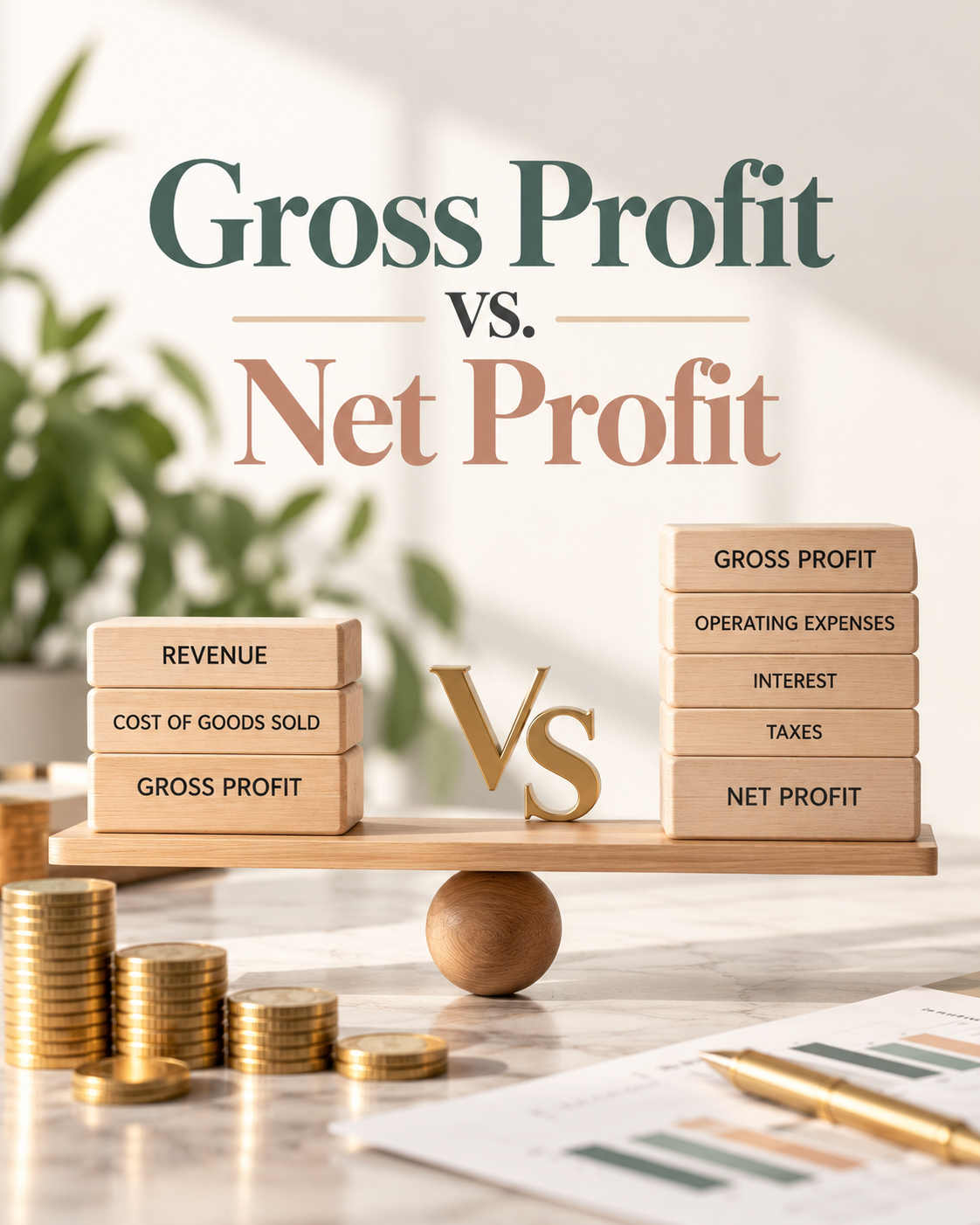
Gross Profit vs. Net Profit
Profit comes in layers. The two you'll hear about most are gross profit and net profit.
Gross profit is what remains after you subtract direct costs from revenue.
Gross profit = Revenue − Cost of goods sold
It shows how much you earn on what you sell, before overhead. A healthy gross profit means your pricing covers the cost of producing your product or service.
Net profit is what remains after you subtract all expenses, including operating costs.
Net profit = Gross profit − Operating expenses
Net profit is your "bottom line." It's the clearest answer to the question every owner asks: is my business actually making money?
A quick way to remember it: gross profit tells you whether your products or services are priced well. Net profit tells you whether your whole business is running well.
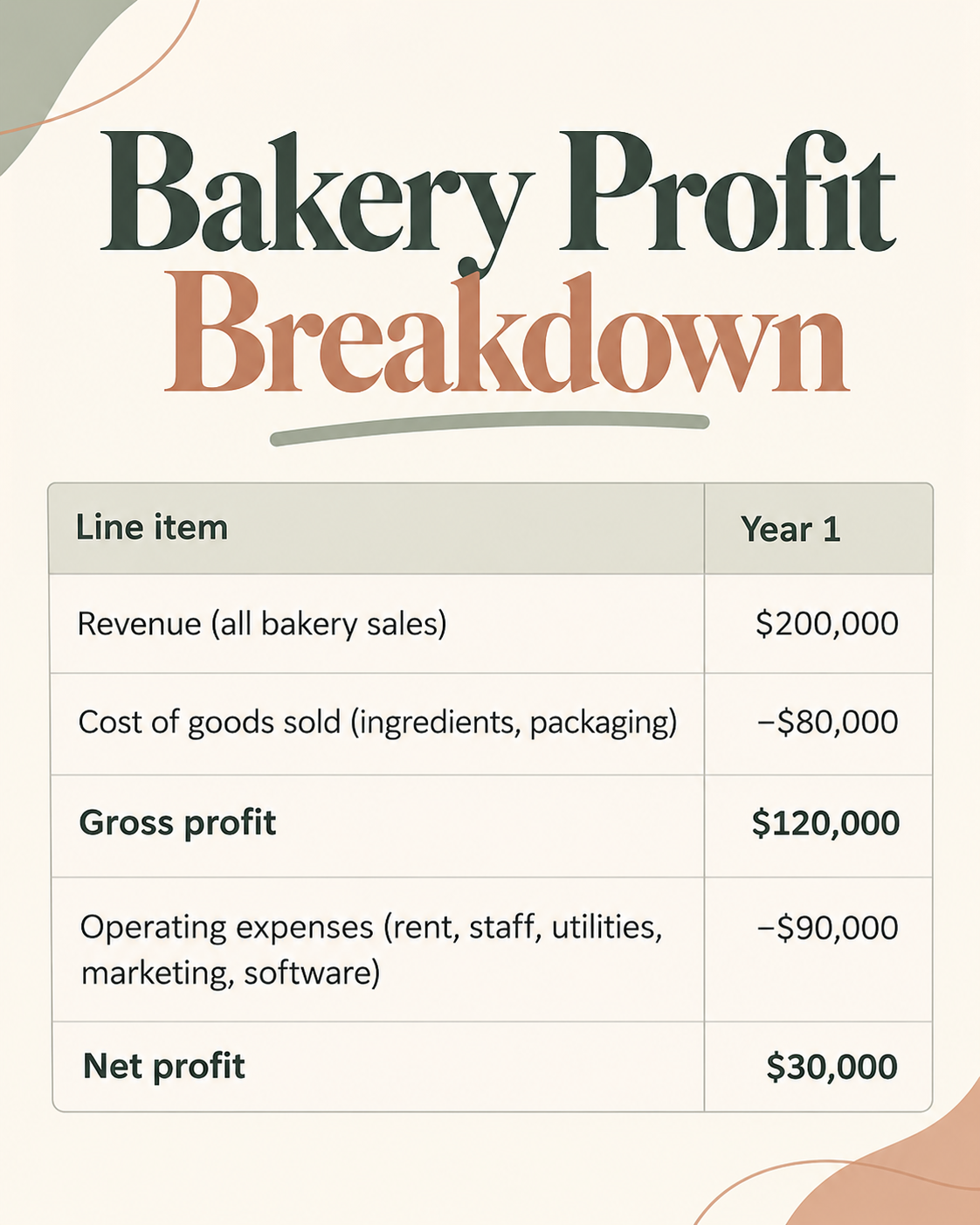
A Simple Business Example
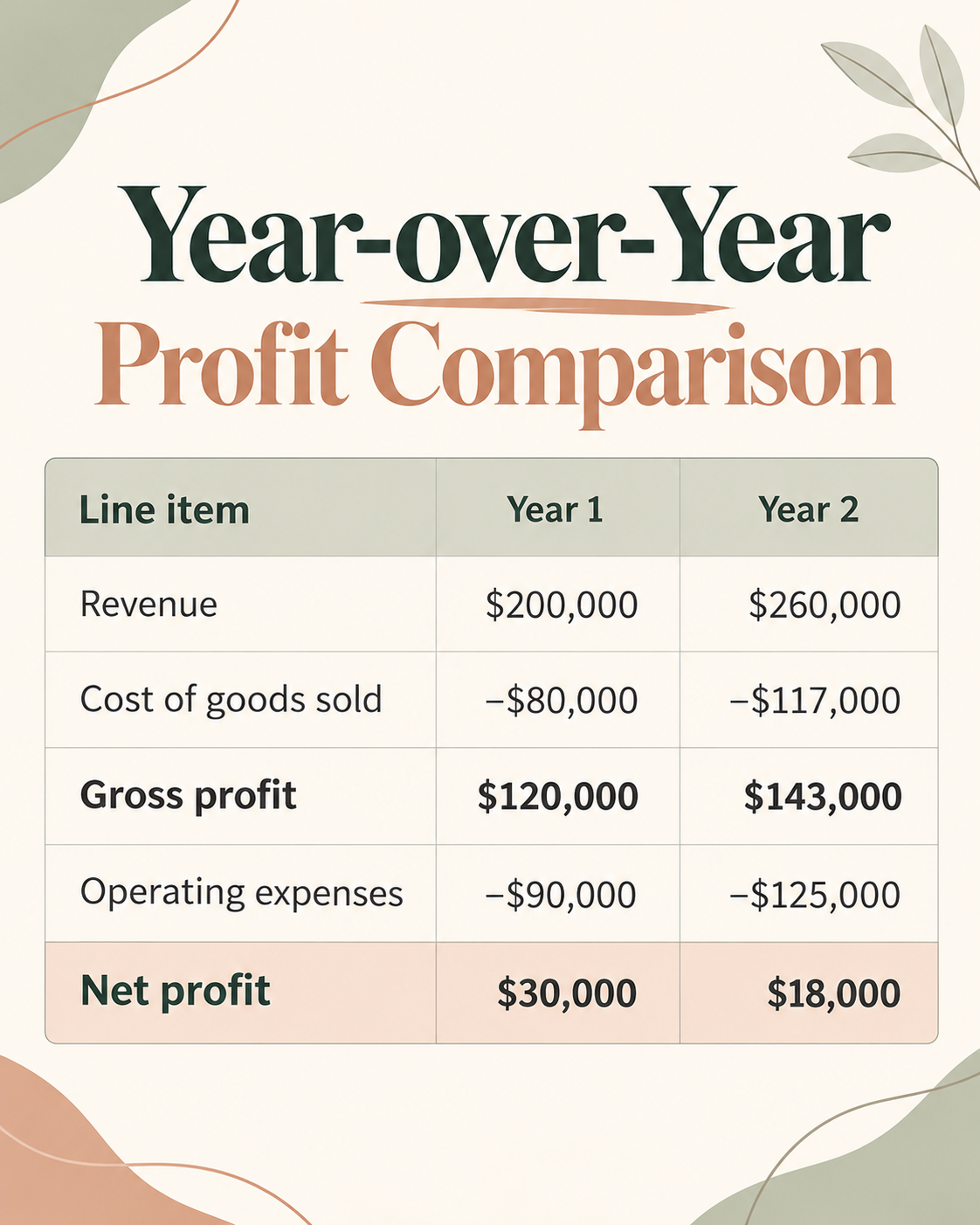
Sara's bakery brought in $200,000. That's an impressive number. But after paying for ingredients, she had $120,000 left. After covering rent, wages and everything else, she kept $30,000.
In other words, for every dollar a customer spent, Sara kept about 15 cents. That 15% is her net profit margin, and it's a far more useful measure of her business's health than the $200,000 alone.
Why Revenue Can Increase While Profit Decreases
In her second year, Sara's bakery grew. She added wholesale orders for local cafés, hired a part-time baker, and moved into a larger space.
Sara sold $60,000 more, yet kept $12,000 less. Her net profit margin fell from 15% to about 7%. How?
Rising direct costs. Ingredient prices went up, and wholesale orders were priced lower than retail. Her cost of goods sold grew faster than her sales.
Bigger overhead. The new space, extra wages and added marketing increased operating expenses by $35,000.
Pricing that didn't keep up. Sara didn't adjust her prices to reflect higher costs.
None of these choices were wrong on their own. Growth often needs investment. The problem is that Sara couldn't see the impact until year-end, when it was too late to adjust.
Watch for these common profit leaks in your own business:
Discounts or promotions that eat into margins
Supplier or material costs that have quietly increased
New hires or subscriptions added without a clear return
Customers or products that sell well but earn very little
Prices that haven't been reviewed in over a year
How Bookkeeping Helps You Monitor Profitability
If Sara had reviewed her numbers every month, she could have spotted the squeeze early. Consistent bookkeeping turns your financial records into an early warning system. Here's how:
Accurate, categorized records. When every transaction is recorded in the right category, you can see exactly where your money goes.
Monthly profit and loss statements. A regular P&L shows revenue, gross profit and net profit side by side, so changes stand out quickly.
Month-to-month comparisons. Looking at trends helps you notice when costs are creeping up faster than sales.
Margin tracking. Watching your gross and net profit margins, not just your sales, shows whether growth is actually paying off.
Better decisions, sooner. With clear numbers in hand, you can adjust prices, renegotiate with suppliers or pause spending before small problems become big ones.
Try this today: Open your most recent profit and loss statement. Find your revenue, then your net profit. Divide net profit by revenue. That percentage is how much of each sale you truly keep.
The Takeaway
Revenue shows how much your business sells. Profit shows how much your business keeps. Both matter, but only profit tells you whether your hard work is paying off.
Strong sales are worth celebrating. Just make sure you know what's happening beneath them, so growth builds your business instead of quietly draining it.
Let Bloom Bookkeeping Help You See the Full Picture
Clear books help you understand what your business is actually earning. If your numbers feel confusing, or you're not sure whether your growth is translating into profit, you don't have to figure it out alone.
Bloom Bookkeeping can help you make sense of the numbers. We'll keep your records organized, prepare clear monthly reports, and help you understand what they mean for your business.
